AI in Personal Finance: The Future of Smart Money Management
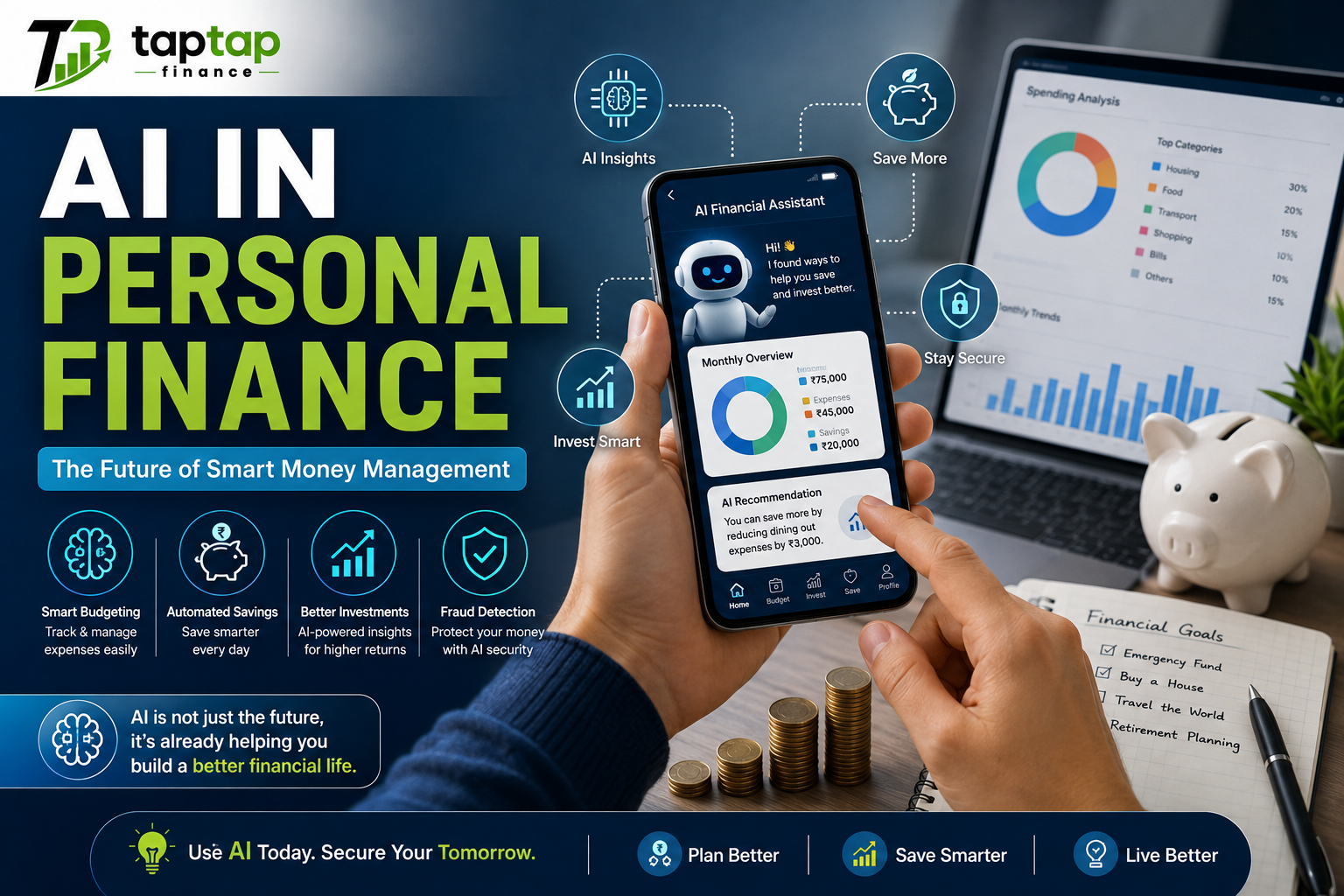
Artificial Intelligence (AI) is no longer just a buzzword. From smartphones and online shopping to healthcare and education, AI has become a part of our daily lives. Now, it’s transforming one of the most important areas of life—personal finance.
Imagine having a smart financial assistant that reminds you to pay bills, tracks your expenses, suggests ways to save money, detects fraud, and even helps you invest based on your financial goals. That’s exactly what AI is making possible.
Whether you’re a student learning how to budget, a working professional planning investments, or someone preparing for retirement, AI can simplify money management and help you make better financial decisions.
In this guide, you’ll discover what AI in personal finance is, how it works, its benefits and risks, the best AI-powered financial tools, and practical tips to use AI wisely.
What is AI in Personal Finance?
AI in personal finance refers to the use of Artificial Intelligence and machine learning to help individuals manage, save, invest, and grow their money.
Instead of manually tracking every expense or researching investment options, AI analyzes your financial data, identifies spending habits, predicts future expenses, and offers personalized recommendations.
Think of AI as your digital financial coach—available 24/7.
Why AI is Becoming Popular in Personal Finance
AI is growing rapidly because it saves time and improves financial decision-making.
Today, people expect quick answers and personalized recommendations. AI provides both by analyzing thousands of data points within seconds.
Some major reasons behind its popularity include:
- Faster financial planning
- Personalized budgeting
- Smart investment recommendations
- Better fraud detection
- Automated savings
- Easy expense tracking
As AI technology becomes more advanced, financial services are becoming more accessible to everyone—not just financial experts.
How AI Works in Personal Finance
AI collects and analyzes financial information such as:
- Income
- Monthly expenses
- Savings
- Bank transactions
- Investment portfolio
- Credit history
Using machine learning algorithms, AI identifies patterns and provides suggestions that suit your financial behavior.
For example, if you spend too much on food delivery every month, an AI budgeting app may recommend reducing that expense and redirecting the savings into an investment account.
Benefits of AI in Personal Finance
1. Smarter Budgeting
Budgeting is one of the biggest challenges for many people.
AI-powered budgeting apps automatically categorize your spending into sections like:
- Food
- Rent
- Travel
- Shopping
- Entertainment
- Bills
This helps you understand exactly where your money is going.
Example
Instead of manually creating spreadsheets every month, AI generates reports and spending insights instantly.
2. Better Investment Decisions
Investing can be confusing, especially for beginners.
AI investment platforms analyze:
- Market trends
- Risk tolerance
- Investment goals
- Portfolio performance
Based on this information, AI suggests suitable investment options.
Some robo-advisors even automatically rebalance your investment portfolio.
3. Fraud Detection
Banks now use AI to detect suspicious transactions in real time.
For example:
If someone suddenly attempts to use your credit card in another country, AI can instantly flag the transaction and notify you.
This improves financial security and reduces fraud.
4. Personalized Financial Advice
Traditional financial advisors may not be affordable for everyone.
AI makes personalized financial guidance available to almost anyone.
It can suggest:
- Better saving habits
- Debt repayment strategies
- Emergency fund targets
- Investment opportunities
- Retirement planning
5. Automated Savings
Many AI-powered apps analyze your spending and automatically transfer small amounts into savings whenever possible.
This “save without thinking” approach helps users build emergency funds effortlessly.
6. Improved Credit Score Management
Some AI tools monitor your credit report and suggest ways to improve your credit score.
For example:
- Pay bills on time
- Reduce credit utilization
- Avoid unnecessary loans
These small improvements can increase your chances of getting loans at lower interest rates.
AI in Personal Finance vs Traditional Financial Planning
| Feature | AI in Personal Finance | Traditional Financial Planning |
|---|---|---|
| Cost | Low or Free | Expensive |
| Availability | 24/7 | Limited Working Hours |
| Personalization | High | High |
| Speed | Instant | Slower |
| Human Emotion | None | Yes |
| Investment Monitoring | Automatic | Manual |
| Expense Tracking | Automatic | Manual |
| Portfolio Rebalancing | Automated | Advisor Required |
Popular AI Applications in Finance
AI Budgeting Apps
These apps automatically categorize expenses and provide spending insights.
Ideal for:
- Students
- Families
- Working professionals
Robo-Advisors
Robo-advisors create and manage investment portfolios using AI.
Benefits include:
- Lower fees
- Automatic diversification
- Goal-based investing
- Portfolio rebalancing
AI Chatbots
Many banks now use AI chatbots to answer customer questions instantly.
Examples include:
- Balance inquiries
- Loan information
- Credit card support
- Investment guidance
Fraud Prevention Systems
AI constantly monitors unusual banking activity.
If suspicious behavior is detected, the system immediately alerts both the bank and the customer.
Real-Life Example of AI in Personal Finance
Imagine Rahul, a 25-year-old software engineer.
He earns ₹50,000 every month but struggles to save money.
After installing an AI budgeting app, he discovers:
- ₹6,500 spent on food delivery
- ₹3,000 on online shopping
- ₹2,000 on unused subscriptions
The app recommends:
- Cancel unnecessary subscriptions
- Limit food delivery
- Start a ₹5,000 monthly SIP
Within one year, Rahul builds an emergency fund and begins investing regularly.
This is how AI turns financial data into practical action.
Challenges and Risks of AI in Personal Finance
Although AI offers many benefits, it also has limitations.
Privacy Concerns
AI requires access to financial data.
Always choose trusted financial platforms with strong security measures.
Overdependence
AI provides recommendations—not guarantees.
You should still understand basic financial concepts before making major decisions.
Data Accuracy
Wrong financial data can lead to poor recommendations.
Regularly review your accounts and transactions.
Market Uncertainty
AI cannot predict stock market movements perfectly.
Investments always carry risk.
Best Practices for Using AI in Personal Finance
Set Clear Financial Goals
Know whether you’re saving for:
- Retirement
- House
- Education
- Vacation
- Emergency fund
AI works better when goals are clearly defined.
Review AI Recommendations
Don’t blindly follow every suggestion.
Use AI as a guide—not your only advisor.
Protect Your Data
Always:
- Use strong passwords
- Enable two-factor authentication
- Avoid sharing banking information on unknown platforms
Continue Learning
Understanding personal finance helps you make smarter decisions, even with AI assistance.
Future of AI in Personal Finance
AI will continue changing the financial industry.
In the next few years, we can expect:
- Hyper-personalized financial planning
- Voice-controlled financial assistants
- Predictive expense management
- Smarter investment strategies
- Improved fraud prevention
- AI-powered retirement planning
Instead of replacing financial advisors, AI will likely work alongside them, making financial advice more affordable and accessible.
Practical Tips to Get Started with AI Finance
If you’re new to AI-powered money management, follow these simple steps:
- Track your monthly income and expenses using an AI budgeting app.
- Build an emergency fund covering 3–6 months of expenses.
- Start a SIP for long-term wealth creation.
- Review AI-generated spending reports every month.
- Compare AI recommendations with your financial goals.
- Stay informed about financial trends and cybersecurity.
Small actions today can lead to significant financial improvements over time.
Frequently Asked Questions (FAQs)
1. What is AI in personal finance?
AI in personal finance uses artificial intelligence to help people manage money, track expenses, save, invest, and make smarter financial decisions.
2. Is AI safe for managing finances?
AI can be safe when used through trusted financial institutions and secure apps. Always protect your personal data and enable strong security features.
3. Can AI replace financial advisors?
AI can handle budgeting, tracking, and basic investment guidance, but complex financial planning may still benefit from a qualified human advisor.
4. What are robo-advisors?
Robo-advisors are AI-powered investment platforms that automatically create and manage investment portfolios based on your goals and risk tolerance.
5. Can AI help me save money?
Yes. AI can analyze your spending habits, identify unnecessary expenses, recommend savings opportunities, and even automate savings.
6. Does AI predict the stock market?
No. AI analyzes historical data and trends to provide insights, but it cannot accurately predict future market movements.
7. Who should use AI personal finance tools?
Students, salaried employees, freelancers, business owners, retirees, and anyone looking to manage money more efficiently can benefit from AI-powered financial tools.
8. What is the biggest advantage of AI in personal finance?
The biggest advantage is personalized financial guidance. AI helps users make informed decisions, automate routine tasks, and stay on track with their financial goals.
Conclusion
Artificial Intelligence is reshaping the way people manage their money. From budgeting and automated savings to investing and fraud detection, AI makes personal finance more efficient, accessible, and personalized than ever before.
However, AI is a tool—not a substitute for financial knowledge. The best approach is to combine AI-powered insights with sound financial principles, clear goals, and informed decision-making.
Whether you’re just starting your financial journey or looking to optimize your investments, embracing AI can help you save time, reduce stress, and make smarter money choices.
Ready to take control of your finances? Explore trusted AI-powered finance tools, stay informed about emerging technologies, and continue learning. Smart financial habits—supported by AI—can help you build lasting wealth and achieve your financial goals.