SIP vs Lump Sum Investment: Which One is Better for Beginners?
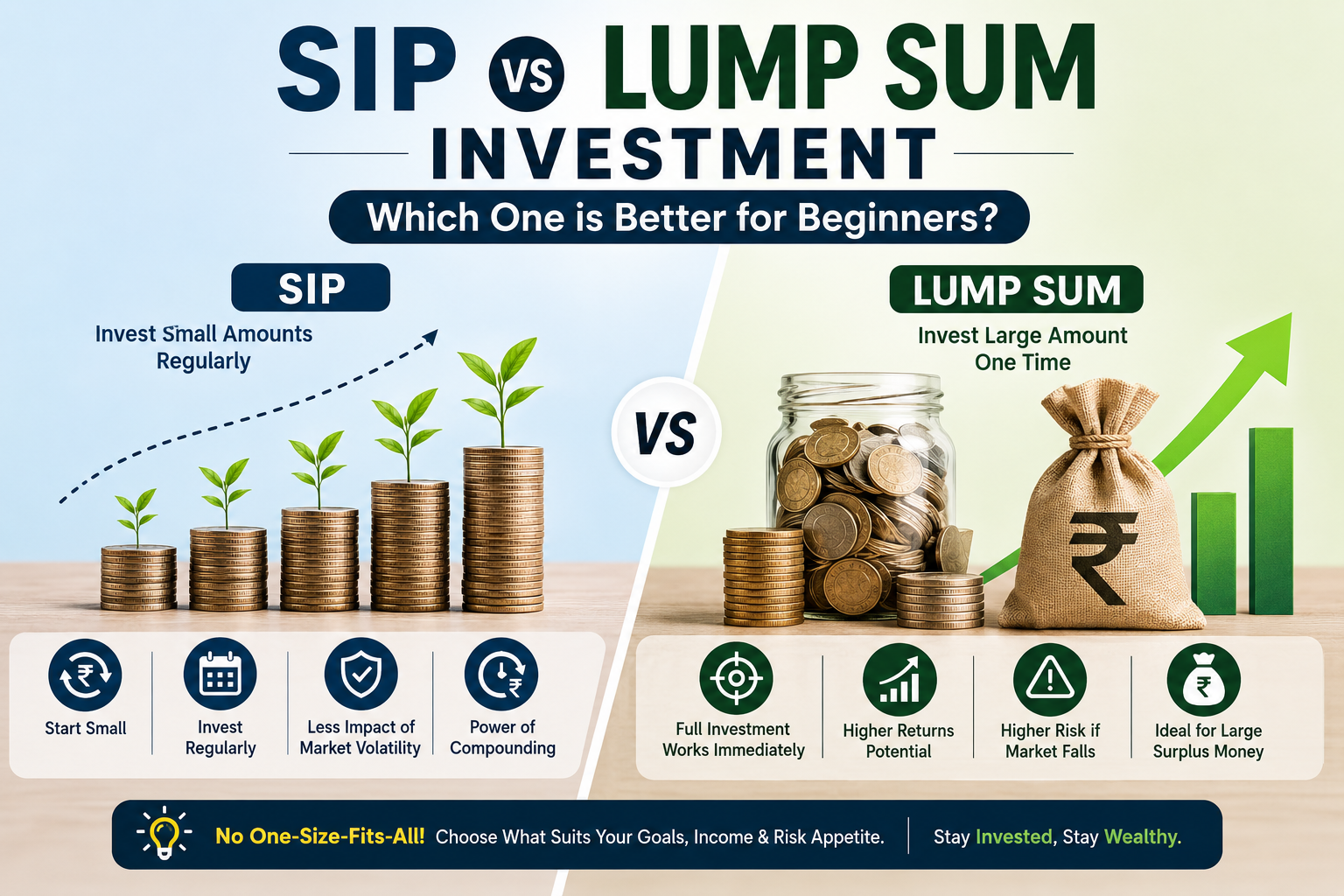
When you decide to start investing, one of the first questions you’ll come across is:
Should I invest through a SIP or make a Lump Sum investment?
Both are popular ways to invest in mutual funds, but they work differently and are suitable for different financial situations.
Many beginners think one option is always better than the other. In reality, the right choice depends on your income, financial goals, market conditions, and risk tolerance.
In this guide, we’ll explain SIP and Lump Sum investments in simple language so you can understand which option suits you best.
What is SIP?
A Systematic Investment Plan (SIP) allows you to invest a fixed amount of money regularly, usually every month, into a mutual fund.
For example, if you invest ₹2,000 every month, that amount is automatically deducted from your bank account and invested in your chosen mutual fund.
SIP helps you build the habit of investing regularly without needing a large amount of money upfront.
What is Lump Sum Investment?
A Lump Sum investment means investing a large amount of money in one go instead of spreading it over several months.
For example, if you receive a bonus of ₹2,00,000 or inherit some money, you can invest the entire amount at once into a mutual fund.
Unlike SIP, there are no monthly investments unless you decide to invest again.
SIP vs Lump Sum: Key Differences
| Feature | SIP | Lump Sum |
|---|---|---|
| Investment Style | Regular monthly investment | One-time investment |
| Starting Amount | Small monthly amount | Large amount required |
| Market Timing | Less important | More important |
| Suitable For | Salaried people and beginners | Investors with surplus funds |
| Risk | Lower impact from market volatility | Higher if invested at the wrong time |
| Investment Discipline | High | Depends on the investor |
Advantages of SIP
1. Affordable for Everyone
One of the biggest advantages of SIP is that you don’t need a large amount of money to begin.
This makes it an excellent choice for students, salaried employees, and first-time investors.
2. Reduces Market Timing Risk
Nobody can consistently predict whether the market will go up or down tomorrow.
SIP spreads your investments over time, helping reduce the impact of market volatility through rupee cost averaging.
3. Builds Financial Discipline
Since money is invested automatically every month, SIP encourages consistent investing.
Over time, this habit can help you build wealth steadily.
4. Benefits from Compounding
The longer you stay invested, the more time your money has to potentially grow through compounding.
Starting early often matters more than investing large amounts later.
Advantages of Lump Sum Investment
1. Full Investment Starts Working Immediately
Instead of waiting months or years to invest gradually, your entire investment starts participating in the market from day one.
2. Good During Market Corrections
If markets have fallen significantly and you have extra money available, a lump sum investment may benefit if markets recover over time.
However, predicting market bottoms is extremely difficult.
3. Ideal for Windfall Income
Lump sum investing can be suitable when you receive:
- Annual bonus
- Business profits
- Inheritance
- Property sale proceeds
- Retirement benefits
Disadvantages of SIP
Although SIP has many advantages, it isn’t perfect.
- Wealth accumulation may be slower if markets rise continuously.
- You need discipline to continue investing during market downturns.
- Missing monthly investments can affect long-term goals.
Disadvantages of Lump Sum
Lump sum investing carries a higher risk if you invest just before a market decline.
Since all your money enters the market at one price, short-term losses can feel larger.
This is why beginners often find SIP less stressful.
Which Investment is Better for Beginners?
For most beginners, SIP is generally the better option.
Here’s why:
- You can start with a small monthly investment.
- It encourages disciplined investing.
- It reduces the pressure of finding the “perfect” time to invest.
- It helps manage market volatility through regular investing.
If you’re new to investing and earn a monthly salary, SIP is often a practical way to begin.
When Should You Choose Lump Sum?
A lump sum investment may be worth considering if:
- You already have a large amount of money available.
- You have an emergency fund in place.
- You plan to stay invested for the long term.
- You understand that markets can fluctuate.
Even then, some investors prefer to spread a large amount over several months instead of investing everything on one day.
Can You Use Both?
Yes.
Many experienced investors use both strategies.
For example:
- Invest monthly through SIP using your regular income.
- Invest additional money as a lump sum when you receive a bonus or other unexpected income.
This approach helps maintain investment discipline while making use of extra funds when available.
Common Mistakes to Avoid
- Choosing an investment method without clear financial goals.
- Stopping SIPs during market declines out of fear.
- Investing a large lump sum without understanding market risks.
- Expecting guaranteed or quick returns.
- Ignoring your own risk tolerance.
Frequently Asked Questions
Is SIP safer than Lump Sum?
Neither option is completely risk-free because both invest in market-linked mutual funds. However, SIP spreads investments over time, which can reduce the impact of market volatility.
Can I convert my SIP into a Lump Sum investment?
Yes. You can continue your SIP and also make one-time investments in the same or another mutual fund, depending on the fund’s rules.
Which option offers higher returns?
Returns depend on factors such as market performance, the type of mutual fund, and how long you remain invested. There is no guarantee that one method will always outperform the other.
Can beginners start with SIP?
Yes. SIP is often considered one of the easiest and most beginner-friendly ways to begin investing because it requires regular contributions instead of a large upfront amount.
Final Thoughts
Both SIP and Lump Sum investments have their own advantages. The best choice depends on your financial situation, investment goals, and comfort with market fluctuations.
If you’re just starting your investment journey, SIP can help you develop a disciplined investing habit without requiring a large initial investment.
If you already have a substantial amount of money available and understand the risks involved, a lump sum investment may also be suitable.
Whichever method you choose, remember that successful investing is about consistency, patience, and staying focused on your long-term financial goals—not trying to predict short-term market movements.
Disclaimer: This article is for educational purposes only and should not be considered financial or investment advice. Mutual fund investments are subject to market risks. Please read all scheme-related documents carefully and consult a qualified financial advisor before making investment decisions.